
Les livres portables : mille ans d'histoire
Le Porte Mémoire
Les livres manuscrits ont longtemps figuré parmi les principaux outils de conservation et de transmission des savoirs — des ouvrages liturgiques et dévotionnels aux textes juridiques, médicaux et scientifiques. Dans l’Europe médiévale, ces objets prenaient généralement la forme de codex : des cahiers de feuillets de parchemin ou de papier cousus ensemble et protégés par une reliure en cuir, en bois ou en parchemin. (1) Ces livres étaient coûteux à produire, mais aussi durables, conçus pour traverser le temps – et parfois spécialement conçus pour être transportés.
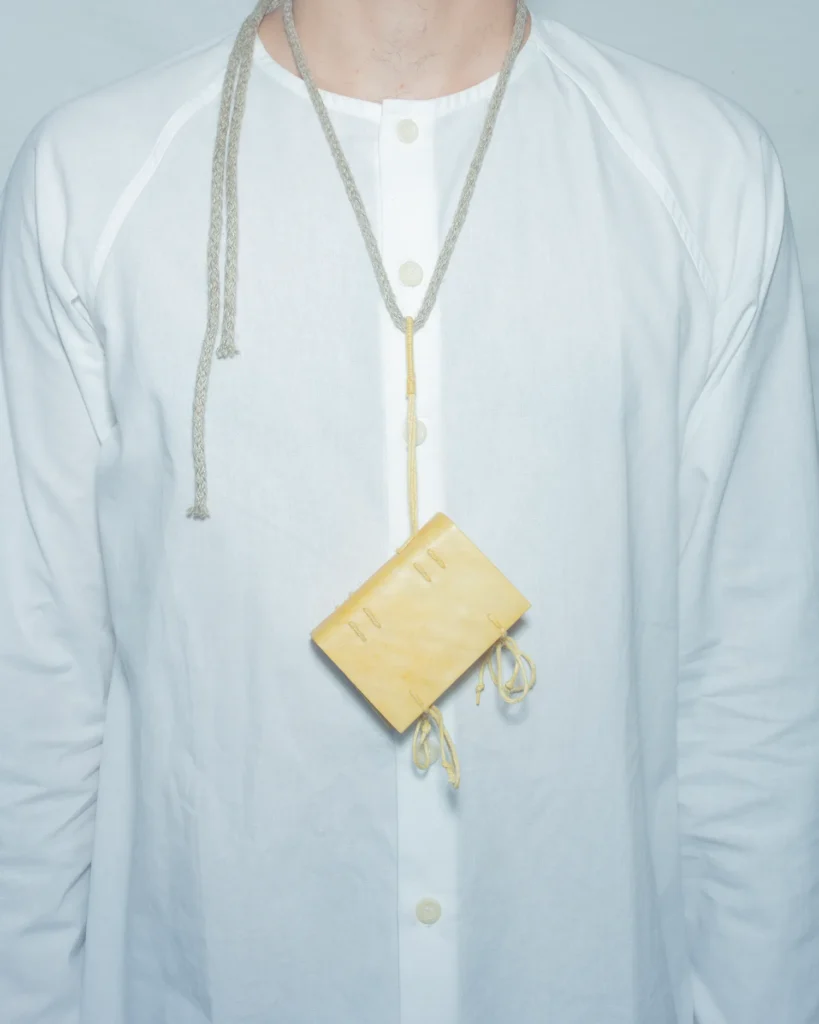
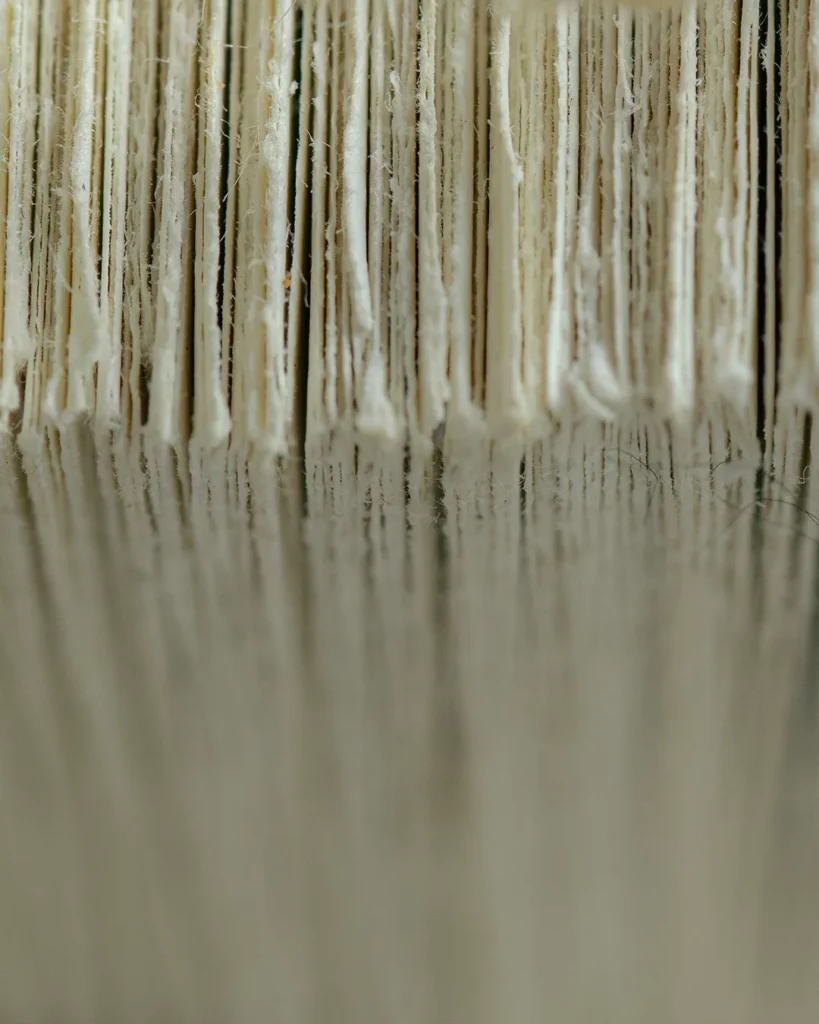
À gauche : Porte Mémoire – Maison Douillet, 2025. | À droite : Détail des pages en papier vergé du « Porte Mémoire ».
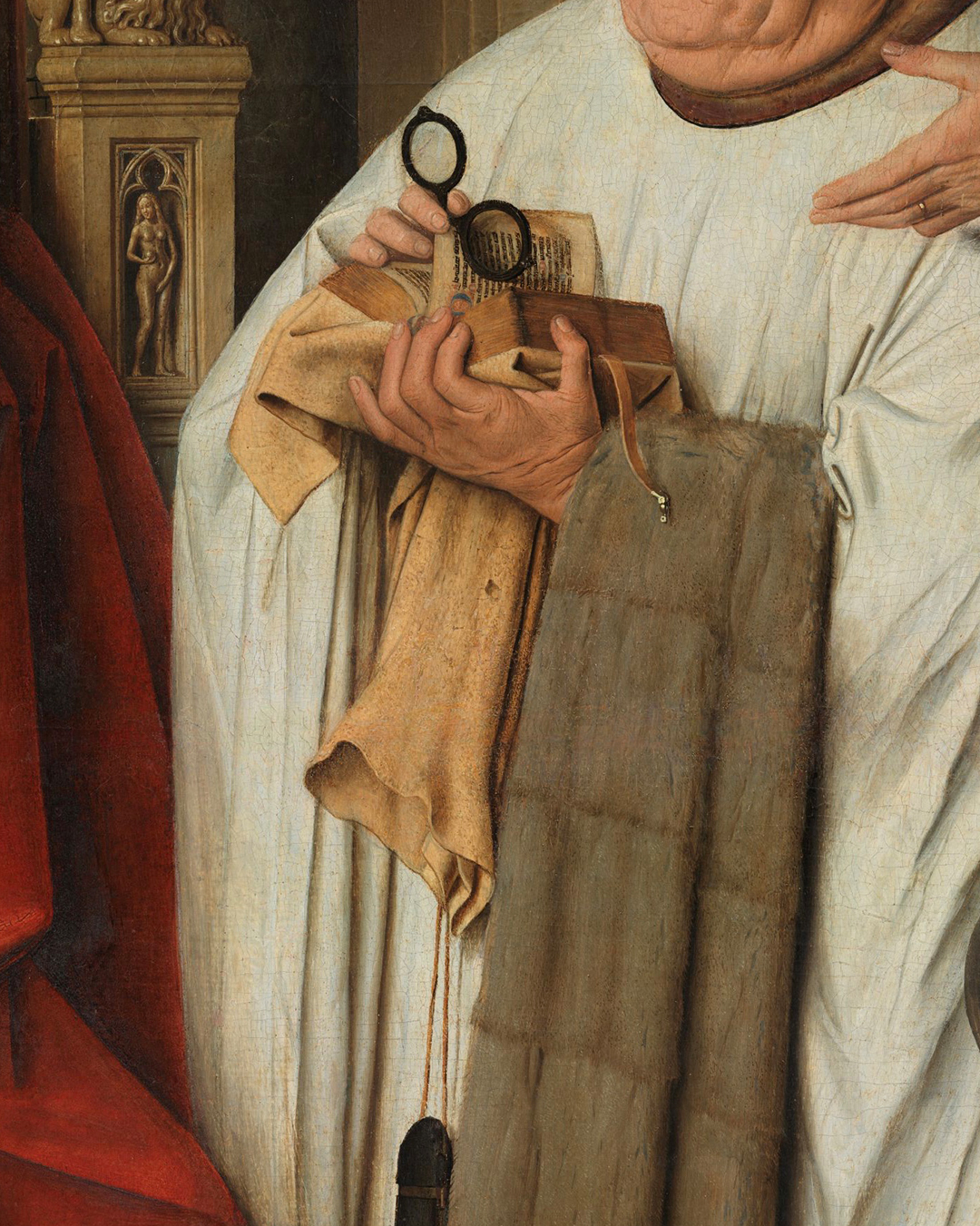
Madone de Canon van der Paele (détail). Jan van Eyck, 1436. Le détail de ce tableau extraordinaire montre un membre du clergé tenant un livre de ceinture portatif.
Qu'est-ce qu'un livre-ceinture médiéval ?
Entre le XIVe et le XVIe siècle, un petit format de livre portatif, aujourd’hui connu sous le nom de girdle book (ou livre-ceinture en français), est apparu dans plusieurs régions d’Europe. (1) Un livre-ceinture se caractérise par une couverture en cuir qui dépasse le bord inférieur des plats et se prolonge en une longue languette effilée, le plus souvent terminée par un nœud, un crochet ou un anneau. Cette languette pouvait être passée dans une ceintures ou un baudrier, de sorte que le livre pendait à l’envers ; une fois porté à la main, il se retrouvait immédiatement dans la bonne orientation pour la lecture. (1)(6)
La recherche moderne — notamment les travaux de l’historienne du livre Margit J. Smith — n’a identifié qu’environ deux douzaines de livres-ceintures médiévaux encore conservés, un nombre très faible au regard des dizaines de milliers de manuscrits qui nous sont parvenus. (1)(6) Ces volumes portatifs apparaissent dans l’art, accrochés à la ceinture de moines, de religieuses, de membres du clergé ainsi que d’hommes et de femmes laïcs, souvent comme signe de dévotion et de maîtrise de la lecture. (1)(6) De nombreux exemplaires conservés contiennent des textes religieux : bréviaires, diurnaux et, surtout, Livres d’Heures, des livres de prières privées conçus pour un usage quotidien par des personnes n’appartenant pas à un ordre religieux. (1)(3)(6)
Ces livres n’étaient pas des « objets de masse » au sens moderne du terme, mais ils s’adressaient à un public lettré relativement large, disposant des moyens de commander ou d’acheter un manuscrit : membres de communautés religieuses, clercs, ainsi qu’hommes et femmes laïcs, pour lesquels un livre-ceinture pouvait être à la fois un outil pratique et un symbole de statut visible. (1)
Calendriers, « livres chauves-souris » et temps transportable
À côté des livres de ceintures classiques, l’Europe médiévale a également produit d’autres formes de manuscrits portatifs conçus pour être portés ou transportés sur le corps. La Bibliothèque nationale de France conserve trois petits calendriers manuscrits pliés, aujourd’hui connus sous le nom de bat books. (2) Il s’agit de longues bandes de parchemin pliées en accordéon, chaque feuillet portant des éléments d’un computus ou d’un système calendaire utilisé pour calculer les dates, les cycles lunaires et les fêtes liturgiques. Selon les conservateurs de la BnF, ces calendriers miniatures étaient probablement portés à la ceinture ou emportés en voyage, afin d’éviter de transporter des volumes plus lourds. (2)
L’historien français Fañch Kermorvan a montré que ces « livres à la ceinture » pouvaient être assemblés à partir de feuillets pliés cousus ensemble, puis placés dans une couverture de cuir munie d’une boucle ou d’un anneau permettant de les fixer à la ceinture. (4) Certains faisaient office de calendriers pluriannuels, permettant à leur propriétaire de calculer la date de Pâques sur une période de soixante-seize ans ; d’autres réunissaient des informations pratiques sous la forme d’un vade-mecum. (2)(4)
Ces objets rappellent que les livres médiévaux n’étaient pas seulement des réceptacles de textes, mais aussi des instruments permettant de gérer le temps et de s’orienter dans le monde : des outils pour savoir où l’on se situe dans l’année, dans le cycle liturgique, par rapport aux phases de la lune. En ce sens, un livre-ceinture ou un bat book est à la fois un objet matériel et un petit modèle portatif de l’univers habité par son propriétaire.

Détail d’un calendrier contenu dans un « livre-chauve-souris » portable (vers 1350, BnF). Le dessin explique une méthode permettant de calculer la date à l’aide de la main.

Un livre de ceinture. La partie nouée est attachée à la ceinture.
Livres, corps et travail de mémoire
À la fin du Moyen Âge, le Livre d’Heures en particulier est devenu une forme de « best-seller » : musées et bibliothèques le décrivent comme le type de manuscrit enluminé le plus produit de son époque, utilisé par des familles laïques pour la dévotion privée. (3) Ces volumes associent souvent des suites de prières à des pages de calendrier indiquant les fêtes de saints, les grandes fêtes et d’autres dates clés. (3)
Certains Livres d’Heures étaient même reliés sous la forme de livres-ceintures, explicitement conçus pour être portés, consultés en déplacement et protégés des intempéries ou du vol grâce à leur couverture prolongée. (1)(3)(6)
Les Livres d’Heures, les livres-ceintures et les livres-chauve-souris participent tous d’une même logique : concentrer des informations essentielles — prière, temps, calcul — dans un volume compact qui reste physiquement proche du corps.
De notre point de vue contemporain, ces manuscrits apparaissent comme une forme ancienne de « données personnelles » : noms de membres de la famille inscrits dans les calendriers, fêtes locales, obligations, itinéraires, dévotions. Ce ne sont pas des encyclopédies ; ils sont au contraire hautement sélectifs. Ce qui y est inscrit correspond précisément à ce qui ne doit pas être oublié.
La Porte Mémoire : un livre-objet contemporain à porter
Le Porte Mémoire de Maison Douillet s’inscrit dans cette histoire des livres portables et portés sur le corps, tout en restant ancré dans le design contemporain. Il s’agit d’un petit livre-objet relié à la main, conçu pour être porté contre la poitrine sur un cordon tricoté en lin — plus proche d’un pendentif que d’un carnet de poche. (5)
Cet objet est constitué de parchemin de chèvre pour la couverture, des fils de lin pour la couture et l’attache, ainsi qu’un papier vergé pour les pages intérieures. Elle est reliée « à la lyonnaise », avec une fermeture frontale et une attache latérale gainée sur le bord de tête, et fabriquée en Isère, en France, comme objet unique. (5)
Plutôt que de multiplier la capacité de stockage, le Porte Mémoire la restreint volontairement. Comme un très petit livre-ceinture ou un bat book, il est conçu pour ne contenir que quelques lignes à la fois : un nom, une adresse, une date, un fragment de pensée. Sa fonction n’est pas de remplacer les outils numériques, mais de réserver un espace physique et visible à ce que quelqu’un choisit de garder près de son propre corps — un geste contemporain qui fait discrètement écho à ces anciens compagnons de prière, de temps et de mémoire.

Maison Douillet – Porte Mémoire, 2025
Source :
1 : Margit J. Smith, The Medieval Girdle Book, Oak Knoll Press / Oak Knoll Press & related papers, oakknoll.com, academia.edu
2 : Bibliothèque nationale de France, “Les bat books” and “Manuscrits médiévaux”, bnf.fr
3 : The Metropolitan Museum of Art & other museum essays on Books of Hours, “The Book of Hours: A Medieval Bestseller”, metmuseum.org; “The Medieval Bestseller: Illuminated Books of Hours”, getty.edu; “The Medieval Top Seller: The Book of Hours”, clevelandart.org
4 : Fañch Kermorvan, “Des livres à la ceinture”, blog.kermorvan.fr
5 : Maison Douillet, product page “Porte Mémoire”, douillet.com
6 : “Girdle book”, Wikipedia, en.wikipedia.org/wiki/Girdle_book