
Exhibition "The Hamlet" - 18-21 Mars 2026
Exhibition "The Hamlet"
Maison Douillet presents “The Hamlet” a public exhibition
that explores themes related to collective memory, the promotion of local resources, and the revival of traditional crafts.
On display is a selection of works by emerging designers and artists, as well as a photographic retrospective of the Alps from the late 19th to the early 20th century.
Practical information:
Dates: March 18–21, 2026 – 12:00 PM to 8:00 PM
Opening reception: March 17 at 6:30 PM (by reservation only)
Address:
BDMMA Gallery
30 Rue du Faubourg Saint-Antoine, 75012 Paris
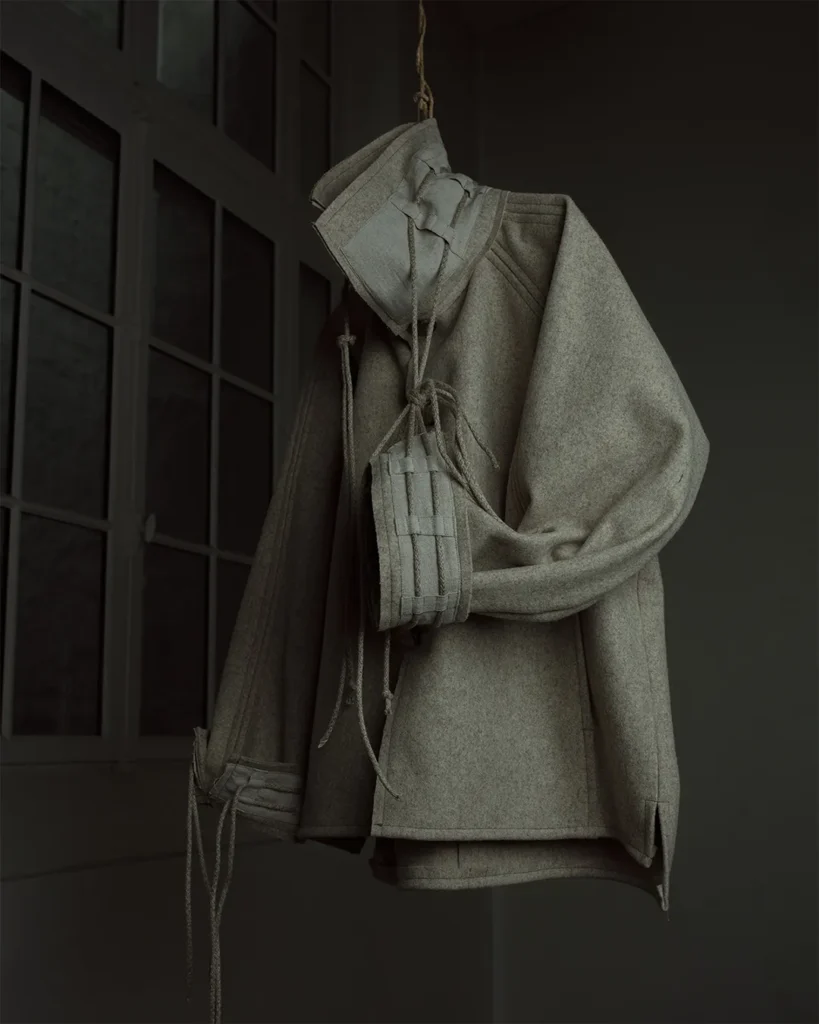
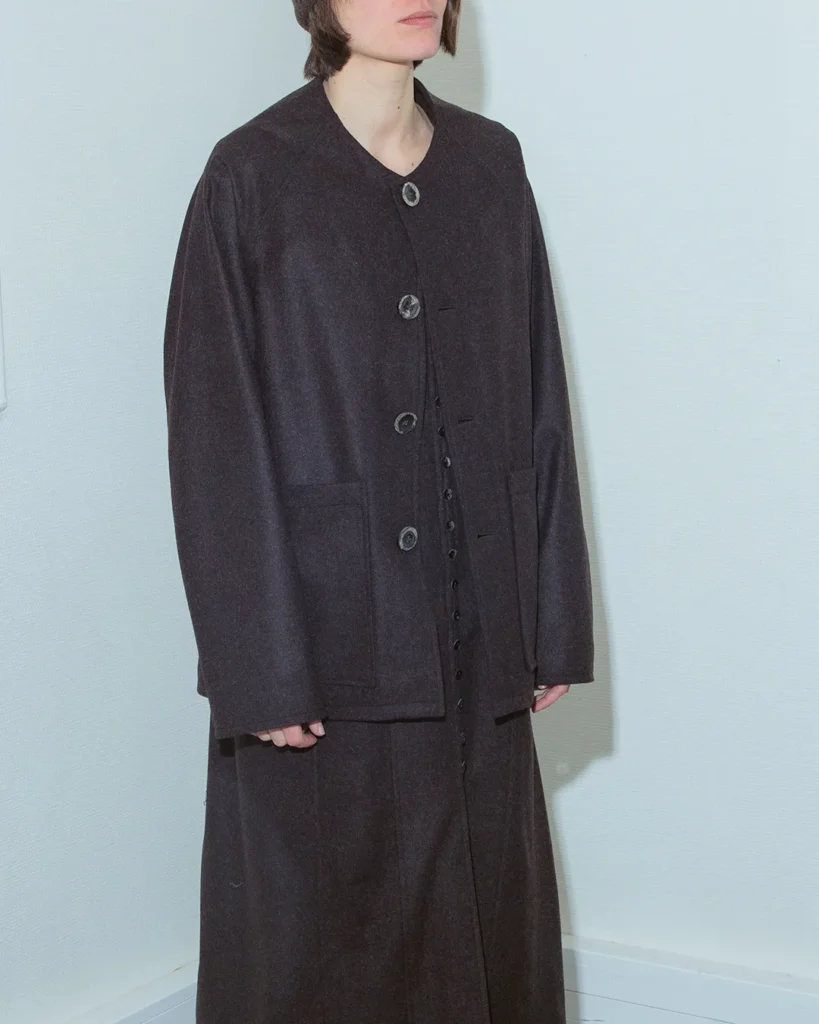
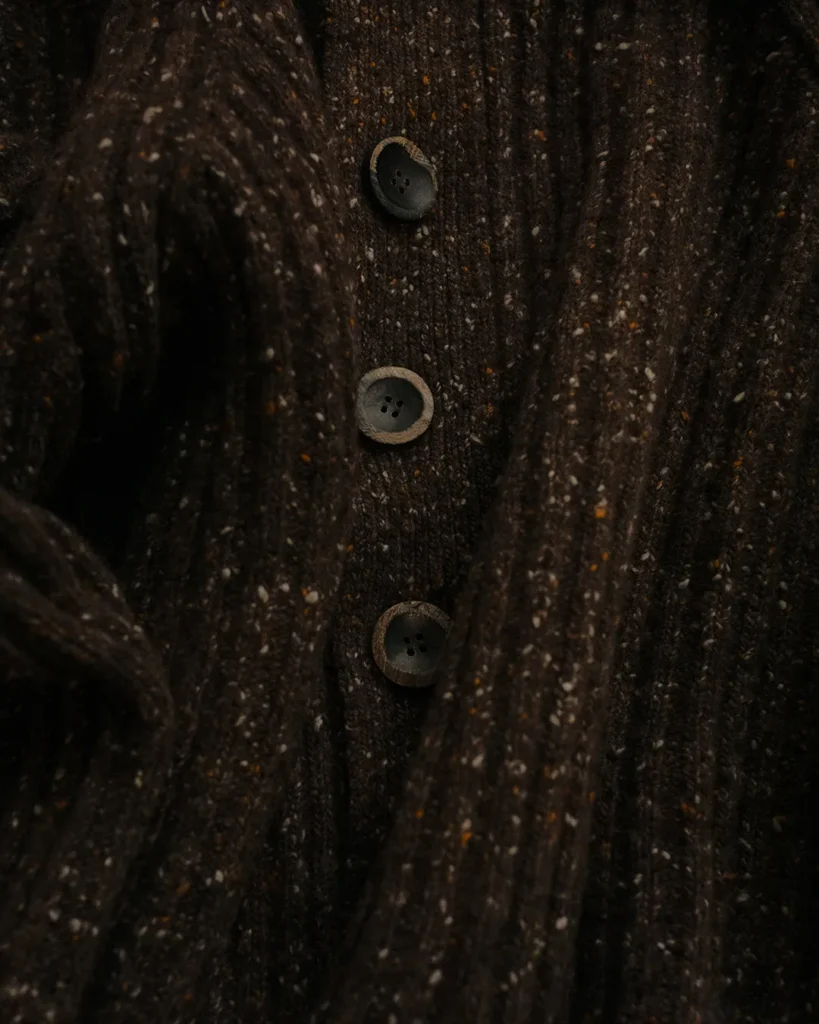
From left to right: Lien Jacket (Burel, Linen, Ram’s Horn) | Alpine Jacket (Loden, Organic Cotton (lining), Ram’s Horn) | Village Cardigan (160s Merino Wool, Cashmere, Ram’s Horn) – Maison Douillet, 2026.
From top to bottom: Lien Jacket (Burel, Linen, Ram’s Horn) | Alpine Jacket (Loden, Organic Cotton (lining), Ram’s Horn) | Village Cardigan (160s Merino Wool, Cashmere, Ram’s Horn) – Maison Douillet, 2026.
Return of a collection
During its residency at the Bureau du Design de Mode et des Métiers d’Art, Maison Douillet developed a new winter collection, focusing on natural and rare materials—and thanks to its strong relationships with specialized workshops in France.
The exhibition “The Hamlet” will provide an opportunity to showcase this work in detail: a presentation of the pieces, the history of the materials, a tour of the workshops, and more.
Some items will be available for pre-order, with delivery scheduled for next fall.


From left to right: Making the “Corte” lamp from Corsican wicker (© Florian Meca) | Lava Jar (© Céline Martinant) | Harvest Bouquet (© Emma Bruschi)
From left to right: Making the “Corte” lamp from Corsican wicker (© Florian Meca) | Lava Jar (© Céline Martinant) | Harvest Bouquet (© Emma Bruschi)
Designers et artistes contemporains
During the “Le Hameau” exhibition, Maison Douillet is presenting a selection of works by contemporary artists and designers—whose approach emphasizes the value of craftsmanship and raw materials.
Apolline Morel-Lab
Apolline Morel-Lab’s work explores the boundary between art and design, placing the intimate relationship between material and light at the heart of her creations.
Focusing primarily on glasswork, the designer creates objects that go beyond mere functionality to explore our perception of light and its ability to transform a space. Inspired by her observations of the landscape, her work translates light phenomena—such as depth, shimmer, and chromatic vibration—into the material itself.
Céline Martinant
Céline Martinant’s approach is to transcend traditional lava-working techniques. Her creations are born solely from stone and fire: without the use of glaze, she develops a process that transforms the volcanic material to create one-of-a-kind pieces.
Based in the Chaîne des Puys, she has been conducting research on the potential of volcanic rocks since 2011. Through processes
of fluidization and vitrification, she succeeds in developing organic textures and metallic hues—evoking a world that is both primitive and sophisticated, where every line and every pattern tells a millennia-old story of transformation and renewal.
Elodie Mra
Elodie Mra develops a visual art practice centered on the body’s memory. By weaving her canvases herself, she transforms the act of weaving into a meditative process, imbued with the tangible traces of lived experience. Paint then comes to inhabit these surfaces, bringing forth the texture of her emotions through the use of natural dyes and raw pigments.
In constant dialogue with natural landscapes, the artist evokes ancient places of life and passage. Her works trace a path, connecting the land to the coast, the mountains to the ocean. Through the language of abstraction, Elodie Mra does not seek to represent these landscapes, but to reawaken their emotional resonance. She expresses memory in the present through painting.
Emma Bruschi
Emma Bruschi graduated from the Geneva University of Art and Design (HEAD) with a Master’s degree in Fashion and Accessories Design in 2019. A fashion designer, she won the CHANEL 19M Prize for Artistic Crafts at the 35th International Festival of Fashion, Photography, and Fashion Accessories—Hyères 2020—with her collection Almanach.
Raw materials, craftsmanship, expertise, the passing down of traditions, and experimentation are at the heart of Emma’s work; to this end, she uses the local landscape as her raw material, drawing inspiration from places that hold personal significance for her. A sense of nostalgia, calm, and slowness emanates from her collections. She draws inspiration for her garments from rural and agricultural settings, workwear, flora and fauna, and all the associated skills. Since 2021, she has been growing rye on the family farm with the help of her uncle Eric Vergain. This rye is the result of a joyful day of harvesting with a scythe and is used to produce her clothing, accessories, and harvest bouquets. Her goal is to cultivate the land and work with her own materials: combining the work of a farmer with that of a designer.
Eng Piplard
Somewhere between curiosity and obsession, the duo of Kelly Eng and Marie Piplard (designers who graduated from the École Nationale Supérieure des Arts Décoratifs in Paris) devote themselves to collecting objects and tools from the past to explore their uniqueness. Whether forgotten, ancient, overlooked, or the subject of fascination, their research unfolds through the material traces of yesteryear. Their practice places particular emphasis on highlighting the craftsmanship of the hand and the intelligence of natural materials.
The studio creates everyday objects and small-scale furniture inspired by traditional forms, uses, techniques, and craftsmanship, which are reinterpreted. The approach lies at the intersection of in-house production and collaboration with artisans.
Florian Meca
A multidisciplinary designer who graduated from ENSCI Les-Ateliers in 2023, Florian Meca is deeply influenced by his fascination with the natural environment. Attuned to the meaning conveyed by form and material, he explores the concept of living spaces by developing a principle of “overall lightness” (a combination of formal, physical, and environmental lightness). A design philosophy that aims to combine the frugality of a piece of furniture—using as little material as possible—with the pure, non-ornamental expression of the materials he employs, while connecting different stakeholders and local resources.
Inès Panizzi
Ines Panizzi lives in the Alpes-Maritimes, on family land where her grandparents used to grow flowers. Her practice is fundamentally guided by an understanding and exploration of her territory: first through a daily life centered on walking, gathering, and foraging—and also through the creation of objects that highlight the materials at her disposal: wood, plants, wool, and earth. Her work is a response to her environment, seeking to immerse herself in it in order to study, understand, and celebrate it. This immersion most often takes the form of a ritual of exploration and gathering.
Julie Brugier
As co-founder of the design studio Frugalestudio, Julie Brugier’s work celebrates raw materials and their narrative power. After initially training in product design at the École Boulle, she went on to study ceramics in Augusto Tozzola’s studio. Working with hemp and clay allows her to explore empirical and sensory methods of creation. Her pieces draw inspiration from vernacular objects of the rural world as well as from amateur domestic practices. They seek to capture the intuitive wisdom of often-obsolete customs—putting traditional techniques to work in service of contemporary domestic rituals. Practices that keep us connected to our natural resources and to the living world.
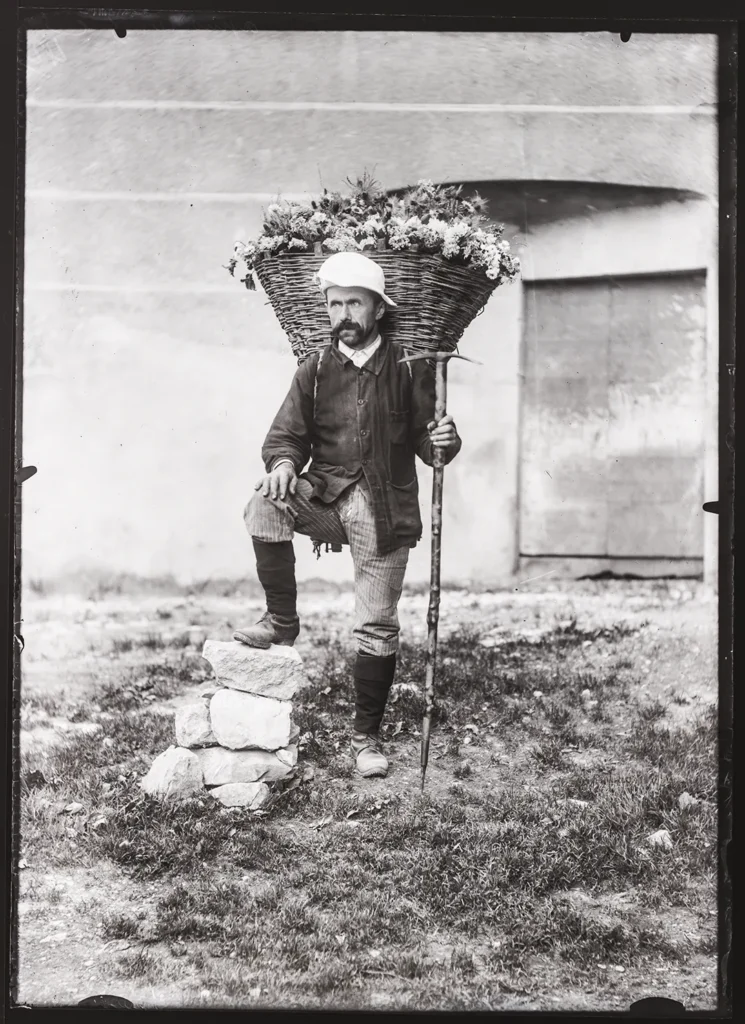
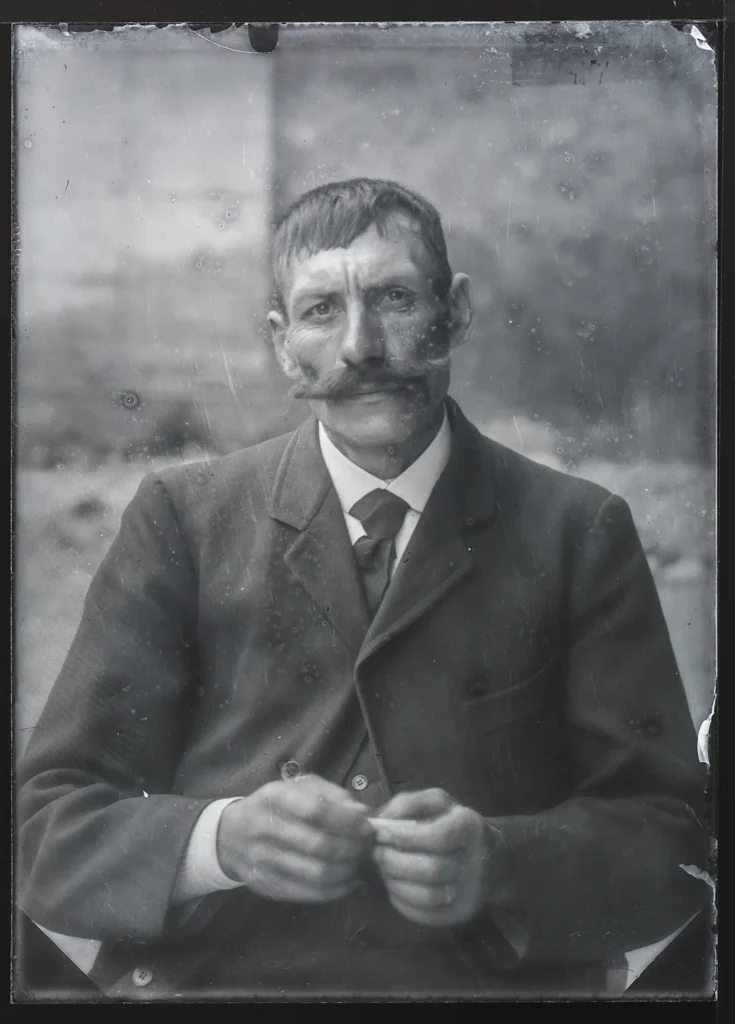
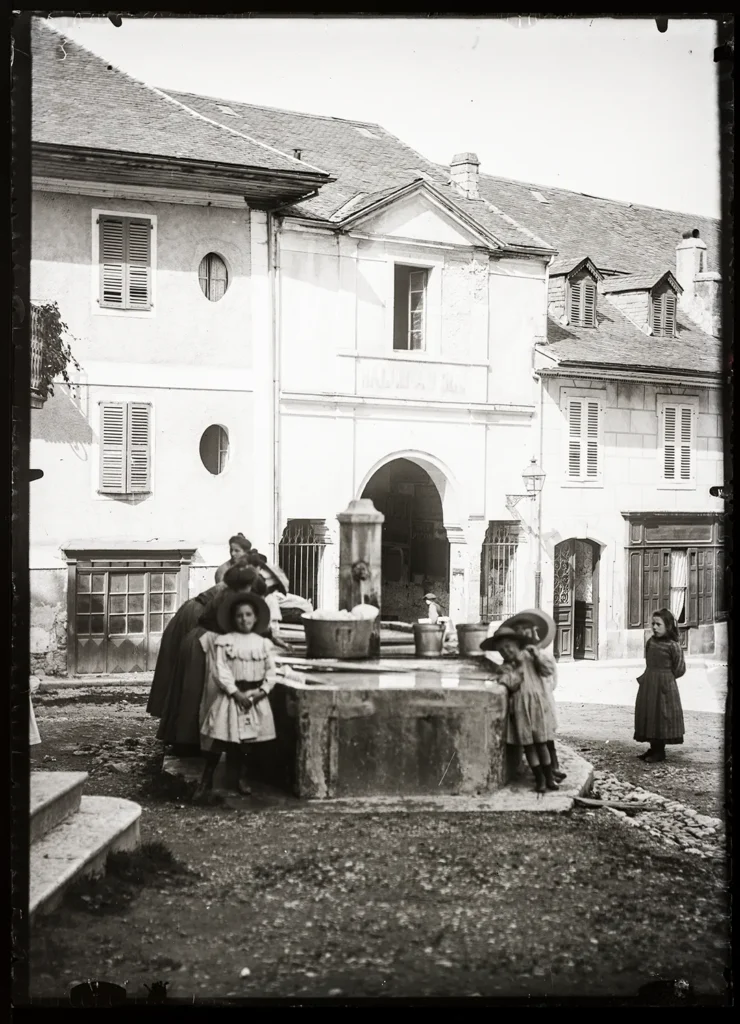
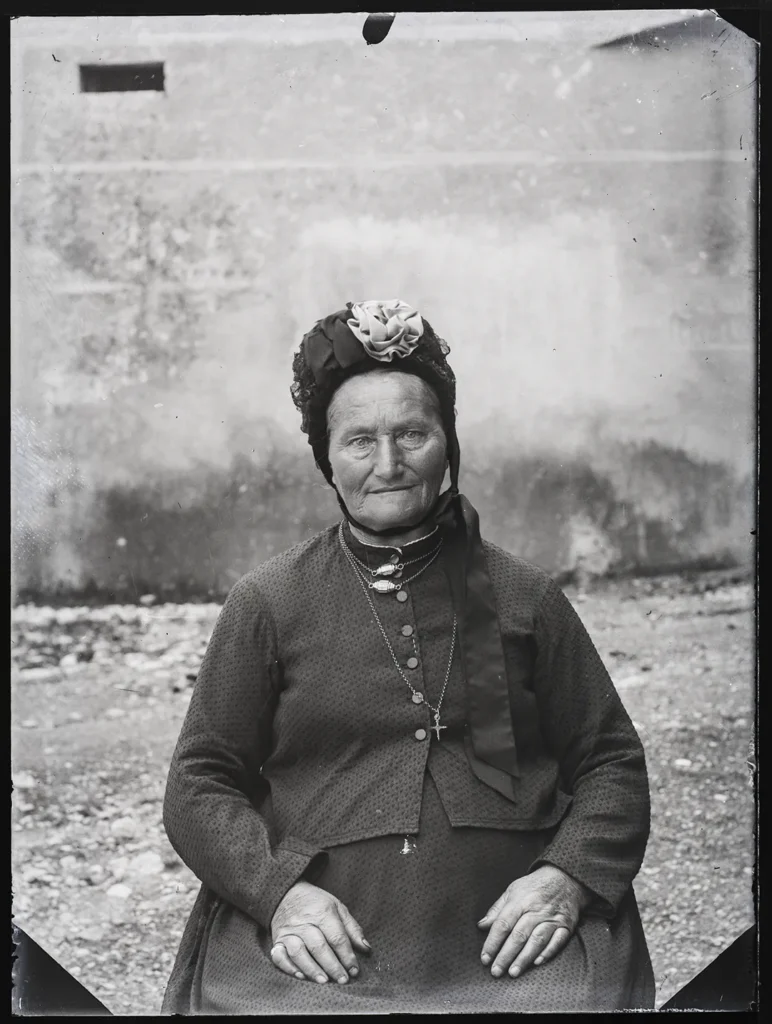
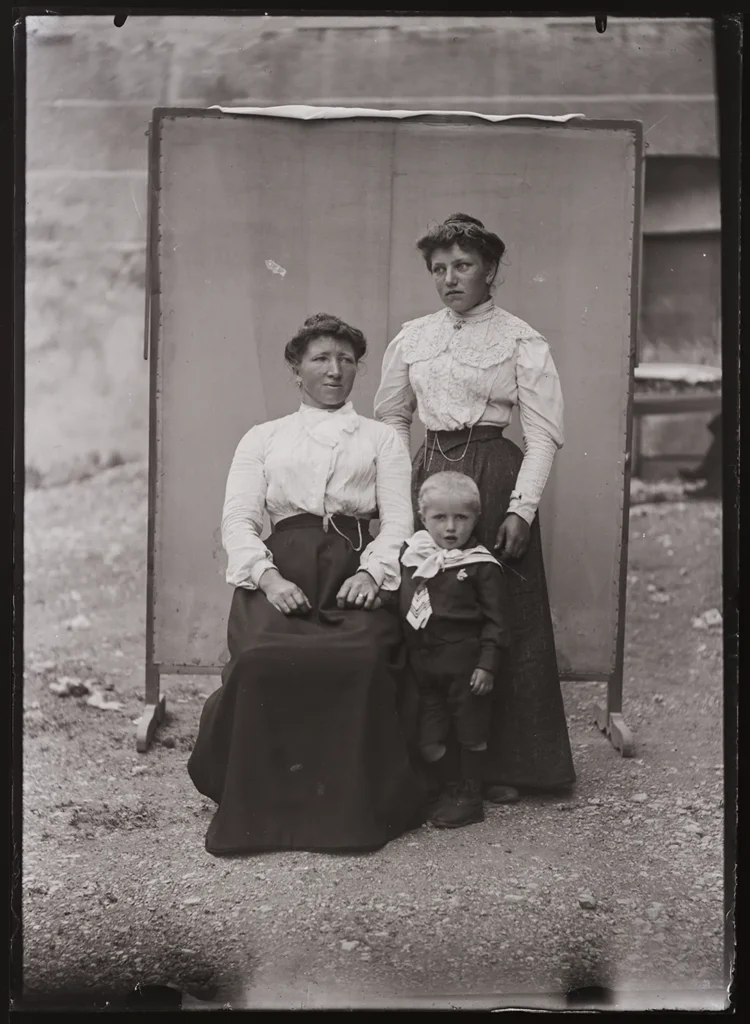
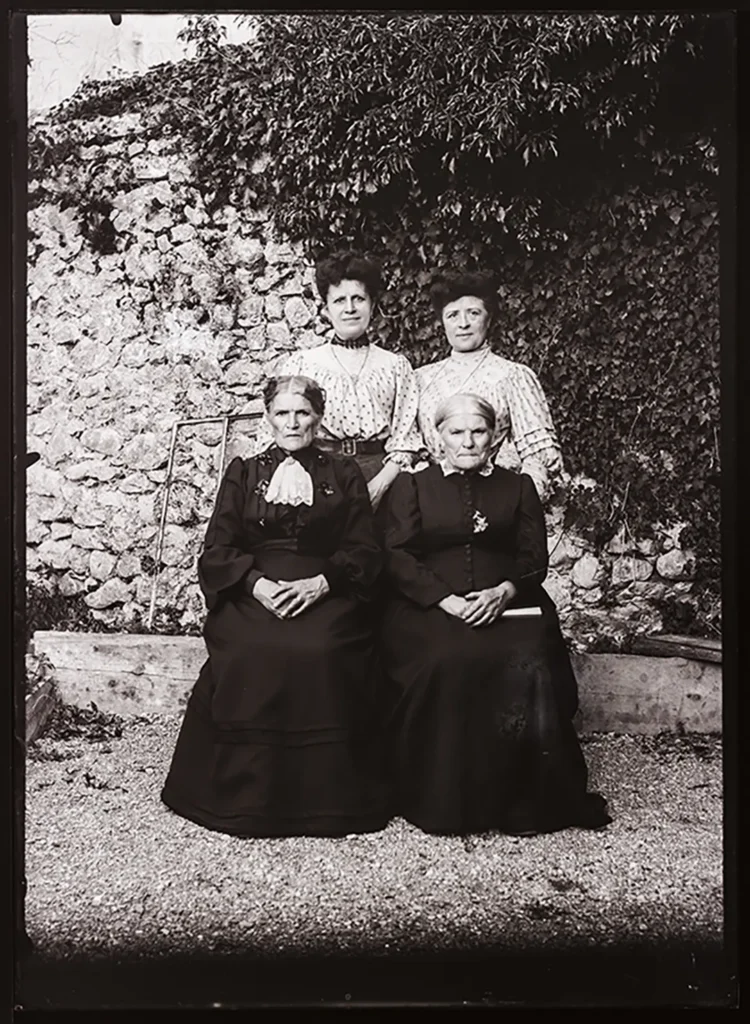
©Musée Savoisien, Département de la Savoie, Léon Aymonier. 1 : 73.52.62 | 2 : 73.52.958 | 3 : 73.52.647 | 4 : 73.52.772 | 5 : 73.52.250 | 6 : 73.52.519
Photographic Retrospective: The Alps, Late 19th–Early 20th Century
The exhibition also explores rural and mountain heritage, notably through a selection of photographs from the late 19th and early 20th centuries, drawn from the archives of the Musée Savoisien and the Grenoble Municipal Library.
These documentary series explore the social landscape of rural Alpine regions—including living conditions, community events, and work practices—and offer insights into memory, cultural heritage, and the human experience.
Practical information:
Dates: March 18–21, 2026 – 12:00 PM to 8:00 PM
Opening reception: March 17 at 6:30 PM (by reservation only)
Adresse : Galerie du BDMMA – 30 Rue du Faubourg Saint-Antoine, 75012 Paris
Réservation et information : request@douillet.com